

Prerequisites
- Install Kosli CLI.
- Optional: get a Kosli API token. You need one to query your own organization, but not for this tutorial.
Setup
Thecyber-dojo Kosli organization is public, so you can follow this tutorial before you have a token of your own. When you query your own organization, replace ignored with a real API token.
Start with the environment
https://cyber-dojo.org runs in an AWS environment that reports to Kosli asaws-prod. Get a log of its recent changes:
When this incident happened the flow was simply named
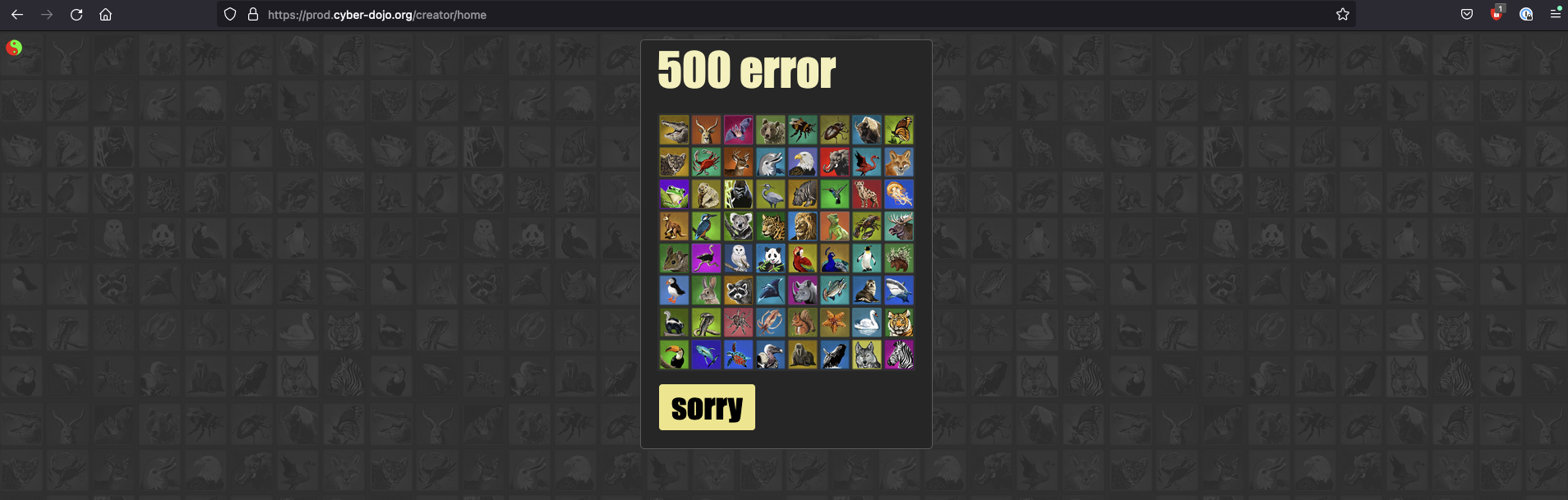
creator. The flow has since been archived, and archiving a flow currently renames it by appending -archived-at-<timestamp>. The historical evidence is unchanged; only the displayed name is longer.creator:b7a5908 started in snapshot #176, and creator:31dee35 stopped in snapshot #177. The new artifact arrived just before the 500 error — that is the one to investigate.
Dig into the artifact
Get the full history ofcreator:b7a5908 with kosli search, using the fingerprint prefix from snapshot #176:
aws-prod at 16:52 — right when the incident began. The output includes a direct link to the git commit. (You can also see the artifact exiting both environments later that evening, once the incident was fixed by a newer commit.)
Follow to the commit
Open the commit URL from the output: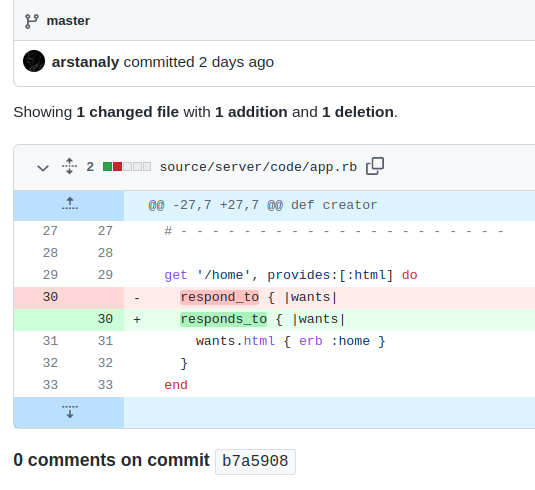
app.rb — an extra s inserted into the method name. The function is called respond_to, not responds_to. That one character caused the 500 error.
What you’ve accomplished
You traced a production 500 error back to a specific git commit — without any direct access toaws-prod. By querying the environment log and artifact history in Kosli, you identified exactly which deployment introduced the incident and which code change caused it.
From here you can:
- Learn more about environment and artifact queries in the Querying Kosli tutorial
- Learn how to follow any commit from CI into production with the From commit to production tutorial